Shopping Cart (0)
Close


24 Hours

+83 178 5718 5371

Yiwu Lei Ji, Trading Co., Ltd Unit 1749, 17th Floor, El Oriente Tower, Yiwu City, China
No products in the cart.

No products in the cart.
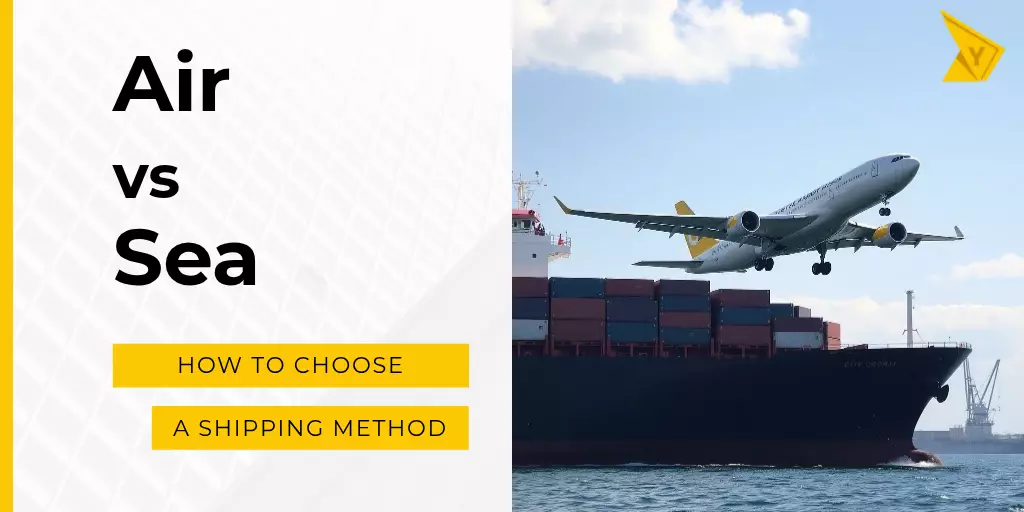
You can save a lot of money by choosing sea freight, but if your product arrives three months late and you miss the holiday season, that “savings” just cost you your entire year’s profit. On the flip side, shipping everything by air might get your goods fast, but the high freight cost can wipe out your margin before you even make a sale.
The right choice depends on your urgency, shipment size, product value, and cash flow. It is not just about freight price. It is about matching your shipping method to your business goals.
If you are selling from Yiwu, whether you are ordering toys, electronics, home goods, or fashion accessories, this guide will help you pick the right path between air cargo and sea cargo without second-guessing yourself.
Air freight is often 4–10x more expensive per kg, but it protects your timeline.
Sea freight is the workhorse – dramatically cheaper for large volumes.
Choosing between air vs sea freight is not just about price per kilogram. It is about how your business works.
Example 1: New product launch
You have a new item to promote on social media or Amazon. Time is everything. If the product arrives late, your launch date slips and marketing budget goes to waste. Air cargo protects your launch.
Example 2: Rush replenishment
Your best-selling product is almost out of stock. Waiting 45 days for sea freight could mean lost sales for weeks. A small air shipment keeps sales alive while your sea order is on the water.
Example 3: Sample orders
Before committing to a large order, you need to test quality. You don’t want to wait 45 days for a sample. Air cargo for samples, then sea freight for bulk.
Example 1: Wholesale inventory
You run a store or online shop and need enough stock for 3–6 months. Sea freight is the only practical way to keep landed cost low.
Example 2: Large container orders
Filling a 20ft or 40ft container from Yiwu? Sea freight drops cost per unit dramatically and improves margins.
Example 3: Low-margin products
For basic household items or cheap accessories, freight cost can make or break your business. Sea cargo is often the only way the math works.
If this still feels complicated, use this simple framework:
This rule works for most small and medium businesses sourcing from Yiwu.
When you are comparing air vs sea freight for your Yiwu shipping needs, the “best shipping method from China” is not a universal answer. It depends on your order size, product type, urgency, and business stage.
Air cargo protects your time and sales. Sea cargo protects your margin and scalability. The smartest strategy is often to use both, at the right time.
Use the right shipping method for your order size and business stage to protect your margin. If you are unsure, start with a small air shipment to test, then switch to sea freight once you are confident in your product and sales volume.
That is how you turn shipping from a cost into a strategic advantage.

We understand you may have questions .To help along your buying journey we compile answers to the most common queries.
Yiwu Machines specializes in sourcing high-quality machinery from China and providing end-to-end logistics solutions, including LCL (groupage) and FCL shipping, supplier coordination, and cargo handling
LCL shipping allows you to ship smaller volumes of cargo without booking a full container. Your goods are consolidated with other shipments, helping you save on shipping costs while maintaining flexibility.
Yes, we provide Full Container Load (FCL) shipping for customers with larger cargo volumes. FCL shipments offer faster transit times and added security for bulk orders.
We provide up to 20% free CBM space on every shipment. Once your accumulated free space reaches 1 CBM, you can use it on future shipments at no extra cost. FCL customers also receive 3 CBM credit for LCL on their next shipment. Terms and conditions apply.
Shipping is handled by Yiwu Shipping, our in-house logistics division under Yiwu Leso Group, ensuring better coordination, accurate scheduling, and reliable delivery.
We work with vetted and trusted Chinese suppliers who meet strict quality standards. We can also assist with inspections before shipment to ensure your order meets your expectations.
Yes, we provide shipment tracking and regular updates so you can monitor your cargo throughout the shipping process.
We accept multiple payment options, including bank transfers, credit/debit cards, and other secure payment methods depending on your location.
Yes, we provide guidance and support with shipping documentation and customs processes to help ensure smooth clearance at your destination.Customers are responsible for taxes imposed.
Shipping times vary depending on the destination and shipping method (LCL or FCL) 8-19days my Air Cargo and 45 days maximum by Sea Cargo, and we prioritize precise scheduling and timely delivery through our integrated logistics system.
![Yiwu Machines Logo - Red [Recovered]-01](https://yiwumachines.com/wp-content/uploads/2026/03/Yiwu-Machines-Logo-Red-Recovered-01.png "Yiwu Machines Logo - Red [Recovered]-01")