Shopping Cart (0)
Close


24 Hours

+83 178 5718 5371

Yiwu Lei Ji, Trading Co., Ltd Unit 1749, 17th Floor, El Oriente Tower, Yiwu City, China
No products in the cart.

No products in the cart.
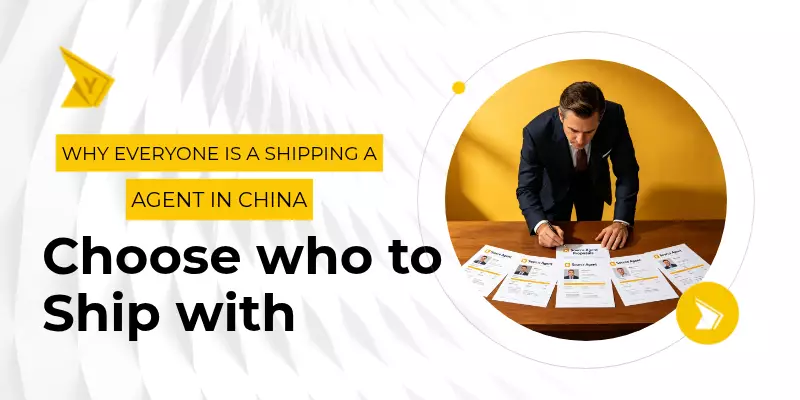
Restaurant owners, factory staff, tour guides—even your supplier’s receptionist—will say, “We have our own forwarder, very cheap, very reliable.”
But here’s the truth: in China, anyone with a WeChat account can call themselves a freight forwarder. The barrier to entry is nearly zero. And while most are legitimate small operators, many are just brokers, sub-contractors, or in worst cases, outright scams.
The gap between a professional forwarder and an amateur can mean the difference between your cargo arriving on time—or disappearing into customs hell.
This Yiwu guide explains why everyone is a shipping agent in China, and gives you a practical checklist to decide who to trust with your cargo.
In China, you don’t need years of logistics experience to start a freight forwarding business. Many small operators simply:
In Yiwu especially, trading is the backbone of the economy. Many people slide into logistics because it’s a natural extension of the supply chain.
It’s common for Chinese suppliers to say, “Use our forwarder, it’s cheaper.” Often, this isn’t about saving you money—it’s about the supplier getting a commission or ensuring they control the paperwork. If something goes wrong, they may prioritize their interests over yours.
With the rise of e-commerce (Amazon FBA, Shopify, TikTok Store), thousands of small buyers now ship from China every year. This created a massive market for “budget forwarders” who cater to low-volume shippers willing to risk reliability for lower prices.
A professional-looking website, an Alibaba store, or a few good reviews are easy to fabricate or inflate. Many “forwarders” have no physical office, no licenses, and no real carrier contracts—they just route your cargo through someone else’s network.
Just because someone calls themselves a shipping agent doesn’t mean they’re qualified. Here’s what happens when you work with an unqualified forwarder:
| Problem | What Happens |
|---|---|
| Hidden fees<\/td> | Quote was $1,500. Final bill is $2,800 after “port congestion,” “documentation,” and “storage” fees.<\/td> |
| Fake bills of lading<\/td> | You pay, they issue a fake B/L, and the cargo never ships—or disappears.<\/td> |
| Delayed customs clearance<\/td> | Wrong documentation or incorrect HS codes cause your cargo to sit at customs for weeks.<\/td> |
| No communication<\/td> | When problems arise, the forwarder goes silent or blames the carrier.<\/td> |
| Cargo damage<\/td> | Poor packaging, improper handling, or lack of insurance leads to losses.<\/td> |
You don’t need to be a logistics expert to find a reliable forwarder. Use this step-by-step vetting process to separate the pros from the pretenders.
| Check | What to look for |
|---|---|
| Physical office in Yiwu or port | Ask for a photo of their office sign, WeChat location, or do a video call. Many scammers use virtual offices. |
| NVOCC license | A genuine forwarder has an NVOCC number from China’s Ministry of Transport. Verify it online. |
| CIFA membership | China International Freight Forwarders Association membership shows legitimacy. |
| Sample bill of lading | Ask for a house B/L with their logo, booking number, and carrier name (e.g., Maersk, MSC). |
| Clear Incoterms | They know the difference between FOB, CIF, DDP, and can explain responsibility for customs/damage. |
| Transparent pricing | Quote includes all fees: origin pickup, customs, freight, destination charges, delivery. |
| Payment terms | Standard: 20–30% deposit, balance after B/L issued. Avoid 100% upfront. |
| Destination agent | They have a verified partner in your country for customs clearance and last-mile delivery. |
| Customer references | Can provide 2–3 recent client contacts who confirm on-time delivery and no hidden fees. |
| Online presence | Professional website, company email (not just @qq.com), and verified profiles on platforms like Alibaba, Trustpilot, or Freightos. |
| Warning sign | What it means |
|---|---|
| Price 30% below market | They will add hidden fees later. |
| 100% payment upfront | You have zero leverage if things go wrong. |
| No license or vague registration | Could be a scam or unregistered operator. |
| Poor English or vague answers | Will fail when real problems arise. |
| Can’t explain Incoterms | Doesn’t understand international shipping basics. |
| No online presence | Likely a temporary or shell operation. |
| Supplier recommends but you can’t verify | May be a kickback arrangement—not your best interest. |
| When it’s okay | When to avoid |
|---|---|
| Supplier’s forwarder is verified (license, references, office) | Supplier refuses to let you use your own forwarder |
| Price is competitive with independent quotes | Price is suspiciously low (20–30% below market) |
| Supplier has long-term relationship with forwarder | You’ve heard negative reviews about the forwarder |
| You’re shipping small LCL (under 5 CBM) | You’re shipping a full container or high-value cargo |
| You trust the supplier completely | This is your first order with the supplier |
Best practice: Even if you use the supplier’s forwarder, run the same vetting process. Better yet, use your own independent forwarder so you have full control.
The reason everyone is a shipping agent in China is that the barrier to entry is low, demand is high, and suppliers profit from kickbacks. But that doesn’t mean you have to trust just anyone.
A reliable freight forwarder is not the cheapest option—they’re the option that gives you a clear contract, verifiable credentials, and honest communication.
Take the time to vet them before you ship. A few hours of due diligence can save you weeks of delays and thousands of dollars in surprise fees.
Talk to a freight specialist before booking your shipment. Verify their license, get a full breakdown, and choose a forwarder whose service matches your cargo needs—not just the lowest headline price.
We understand you may have questions .To help along your buying journey we compile answers to the most common queries.
Yiwu Machines specializes in sourcing high-quality machinery from China and providing end-to-end logistics solutions, including LCL (groupage) and FCL shipping, supplier coordination, and cargo handling
LCL shipping allows you to ship smaller volumes of cargo without booking a full container. Your goods are consolidated with other shipments, helping you save on shipping costs while maintaining flexibility.
Yes, we provide Full Container Load (FCL) shipping for customers with larger cargo volumes. FCL shipments offer faster transit times and added security for bulk orders.
We provide up to 20% free CBM space on every shipment. Once your accumulated free space reaches 1 CBM, you can use it on future shipments at no extra cost. FCL customers also receive 3 CBM credit for LCL on their next shipment. Terms and conditions apply.
Shipping is handled by Yiwu Shipping, our in-house logistics division under Yiwu Leso Group, ensuring better coordination, accurate scheduling, and reliable delivery.
We work with vetted and trusted Chinese suppliers who meet strict quality standards. We can also assist with inspections before shipment to ensure your order meets your expectations.
Yes, we provide shipment tracking and regular updates so you can monitor your cargo throughout the shipping process.
We accept multiple payment options, including bank transfers, credit/debit cards, and other secure payment methods depending on your location.
Yes, we provide guidance and support with shipping documentation and customs processes to help ensure smooth clearance at your destination.Customers are responsible for taxes imposed.
Shipping times vary depending on the destination and shipping method (LCL or FCL) 8-19days my Air Cargo and 45 days maximum by Sea Cargo, and we prioritize precise scheduling and timely delivery through our integrated logistics system.
![Yiwu Machines Logo - Red [Recovered]-01](https://yiwumachines.com/wp-content/uploads/2026/03/Yiwu-Machines-Logo-Red-Recovered-01.png "Yiwu Machines Logo - Red [Recovered]-01")