Shopping Cart (0)
Close


24 Hours

+83 178 5718 5371

Yiwu Lei Ji, Trading Co., Ltd Unit 1749, 17th Floor, El Oriente Tower, Yiwu City, China
No products in the cart.

No products in the cart.
 0
0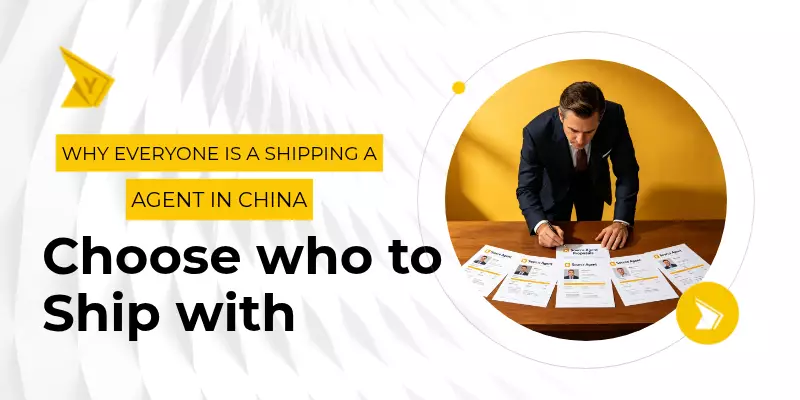
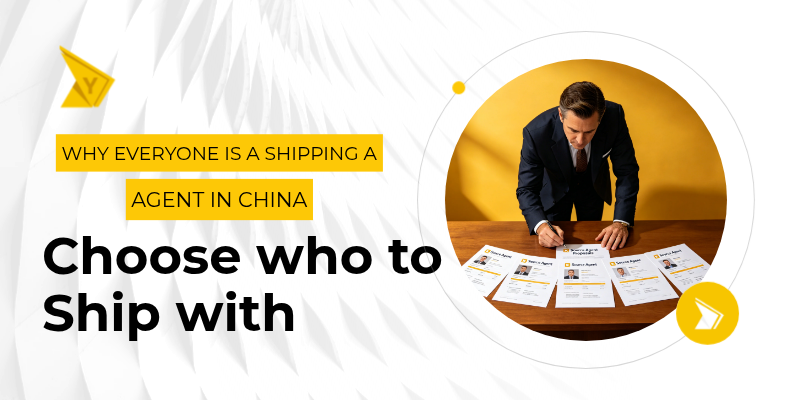
Restaurant owners, factory staff, tour guides—even your supplier’s receptionist—will say, “We have our own forwarder, very cheap, very reliable.”
But here’s the truth: in China, anyone with a WeChat account can call themselves a freight forwarder. The barrier to entry is nearly zero. And while most are legitimate small operators, many are just brokers, sub-contractors, or in worst cases, outright scams.
The gap between a professional forwarder and an amateur can mean the difference between your cargo arriving on time—or disappearing into customs hell.
This Yiwu guide explains why everyone is a shipping agent in China, and gives you a practical checklist to decide who to trust with your cargo.
In China, you don’t need years of logistics experience to start a freight forwarding business. Many small operators simply:
In Yiwu especially, trading is the backbone of the economy. Many people slide into logistics because it’s a natural extension of the supply chain.
It’s common for Chinese suppliers to say, “Use our forwarder, it’s cheaper.” Often, this isn’t about saving you money—it’s about the supplier getting a commission or ensuring they control the paperwork. If something goes wrong, they may prioritize their interests over yours.
With the rise of e-commerce (Amazon FBA, Shopify, TikTok Store), thousands of small buyers now ship from China every year. This created a massive market for “budget forwarders” who cater to low-volume shippers willing to risk reliability for lower prices.
A professional-looking website, an Alibaba store, or a few good reviews are easy to fabricate or inflate. Many “forwarders” have no physical office, no licenses, and no real carrier contracts—they just route your cargo through someone else’s network.
Just because someone calls themselves a shipping agent doesn’t mean they’re qualified. Here’s what happens when you work with an unqualified forwarder:
| Problem | What Happens |
|---|---|
| Hidden fees<\/td> | Quote was $1,500. Final bill is $2,800 after “port congestion,” “documentation,” and “storage” fees.<\/td> |
| Fake bills of lading<\/td> | You pay, they issue a fake B/L, and the cargo never ships—or disappears.<\/td> |
| Delayed customs clearance<\/td> | Wrong documentation or incorrect HS codes cause your cargo to sit at customs for weeks.<\/td> |
| No communication<\/td> | When problems arise, the forwarder goes silent or blames the carrier.<\/td> |
| Cargo damage<\/td> | Poor packaging, improper handling, or lack of insurance leads to losses.<\/td> |
You don’t need to be a logistics expert to find a reliable forwarder. Use this step-by-step vetting process to separate the pros from the pretenders.
| Check | What to look for |
|---|---|
| Physical office in Yiwu or port | Ask for a photo of their office sign, WeChat location, or do a video call. Many scammers use virtual offices. |
| NVOCC license | A genuine forwarder has an NVOCC number from China’s Ministry of Transport. Verify it online. |
| CIFA membership | China International Freight Forwarders Association membership shows legitimacy. |
| Sample bill of lading | Ask for a house B/L with their logo, booking number, and carrier name (e.g., Maersk, MSC). |
| Clear Incoterms | They know the difference between FOB, CIF, DDP, and can explain responsibility for customs/damage. |
| Transparent pricing | Quote includes all fees: origin pickup, customs, freight, destination charges, delivery. |
| Payment terms | Standard: 20–30% deposit, balance after B/L issued. Avoid 100% upfront. |
| Destination agent | They have a verified partner in your country for customs clearance and last-mile delivery. |
| Customer references | Can provide 2–3 recent client contacts who confirm on-time delivery and no hidden fees. |
| Online presence | Professional website, company email (not just @qq.com), and verified profiles on platforms like Alibaba, Trustpilot, or Freightos. |
| Warning sign | What it means |
|---|---|
| Price 30% below market | They will add hidden fees later. |
| 100% payment upfront | You have zero leverage if things go wrong. |
| No license or vague registration | Could be a scam or unregistered operator. |
| Poor English or vague answers | Will fail when real problems arise. |
| Can’t explain Incoterms | Doesn’t understand international shipping basics. |
| No online presence | Likely a temporary or shell operation. |
| Supplier recommends but you can’t verify | May be a kickback arrangement—not your best interest. |
| When it’s okay | When to avoid |
|---|---|
| Supplier’s forwarder is verified (license, references, office) | Supplier refuses to let you use your own forwarder |
| Price is competitive with independent quotes | Price is suspiciously low (20–30% below market) |
| Supplier has long-term relationship with forwarder | You’ve heard negative reviews about the forwarder |
| You’re shipping small LCL (under 5 CBM) | You’re shipping a full container or high-value cargo |
| You trust the supplier completely | This is your first order with the supplier |
Best practice: Even if you use the supplier’s forwarder, run the same vetting process. Better yet, use your own independent forwarder so you have full control.
The reason everyone is a shipping agent in China is that the barrier to entry is low, demand is high, and suppliers profit from kickbacks. But that doesn’t mean you have to trust just anyone.
A reliable freight forwarder is not the cheapest option—they’re the option that gives you a clear contract, verifiable credentials, and honest communication.
Take the time to vet them before you ship. A few hours of due diligence can save you weeks of delays and thousands of dollars in surprise fees.
Talk to a freight specialist before booking your shipment. Verify their license, get a full breakdown, and choose a forwarder whose service matches your cargo needs—not just the lowest headline price.
We understand you may have questions .To help along your buying journey we compile answers to the most common queries.
Yiwu Machines specializes in sourcing high-quality machinery from China and providing end-to-end logistics solutions, including LCL (groupage) and FCL shipping, supplier coordination, and cargo handling
LCL shipping allows you to ship smaller volumes of cargo without booking a full container. Your goods are consolidated with other shipments, helping you save on shipping costs while maintaining flexibility.
Yes, we provide Full Container Load (FCL) shipping for customers with larger cargo volumes. FCL shipments offer faster transit times and added security for bulk orders.
We provide up to 20% free CBM space on every shipment. Once your accumulated free space reaches 1 CBM, you can use it on future shipments at no extra cost. FCL customers also receive 3 CBM credit for LCL on their next shipment. Terms and conditions apply.
Shipping is handled by Yiwu Shipping, our in-house logistics division under Yiwu Leso Group, ensuring better coordination, accurate scheduling, and reliable delivery.
We work with vetted and trusted Chinese suppliers who meet strict quality standards. We can also assist with inspections before shipment to ensure your order meets your expectations.
Yes, we provide shipment tracking and regular updates so you can monitor your cargo throughout the shipping process.
We accept multiple payment options, including bank transfers, credit/debit cards, and other secure payment methods depending on your location.
Yes, we provide guidance and support with shipping documentation and customs processes to help ensure smooth clearance at your destination.Customers are responsible for taxes imposed.
Shipping times vary depending on the destination and shipping method (LCL or FCL) 8-19days my Air Cargo and 45 days maximum by Sea Cargo, and we prioritize precise scheduling and timely delivery through our integrated logistics system.
 0
0
Choosing the wrong type of seller can cost you money, time, and a lot of unnecessary frustration. It can also lead to problems with quality, delivery dates, and customization. So if you are sourcing in Yiwu, knowing who is a manufacturer and who is a reseller is a very useful skill.
Yiwu is a trade city, not a factory park. That is the first thing to remember. A lot of people working in the market are traders, not factory owners. They rent booth space, build product catalogs, and source goods from factories in Zhejiang, Guangdong, and other industrial areas. Many are good at speaking English, answering quickly, and showing nice samples. That does not make them bad — it just means they are not always the people actually making the product. Manufacturers, on the other hand, control production. They know the machines, materials, process, and lead time. If you ask a technical question, they can usually answer it directly.
| It matters a lot when: | It matters less when: |
|---|---|
| Ordering more than 500 units per SKU | Buying 50–200 pieces for a test run |
| Need custom packaging or branding | Want a mixed assortment of products |
| Plan to reorder the same item again and again | Need goods quickly |
| Strict quality control & compliance requirements | Still testing the market |
A business license is not everything, but it helps. If the company scope includes words like production, manufacturing, or processing, that is a stronger sign that the seller is connected to a factory. If the scope says wholesale, trade, or trading services, you may be dealing with a reseller. Combine this with other checks.
Ask yourself two questions: How big is my order? and Do I need customization?
Yiwu is full of opportunity, but it rewards buyers who ask smart questions. Check the license, ask about customization, look at MOQ, and, when possible, verify the production site. For big, repeat, or custom orders, manufacturer access matters. For small, mixed, or urgent orders, a reseller can still be useful. The key is knowing which one you are paying for. That one difference can save you a lot of money, and maybe even a few headaches.
Before your next Yiwu order, ask:
Am I paying factory pricing or trader pricing — and does my order size justify the difference?
We understand you may have questions .To help along your buying journey we compile answers to the most common queries.
Yiwu Machines specializes in sourcing high-quality machinery from China and providing end-to-end logistics solutions, including LCL (groupage) and FCL shipping, supplier coordination, and cargo handling
LCL shipping allows you to ship smaller volumes of cargo without booking a full container. Your goods are consolidated with other shipments, helping you save on shipping costs while maintaining flexibility.
Yes, we provide Full Container Load (FCL) shipping for customers with larger cargo volumes. FCL shipments offer faster transit times and added security for bulk orders.
We provide up to 20% free CBM space on every shipment. Once your accumulated free space reaches 1 CBM, you can use it on future shipments at no extra cost. FCL customers also receive 3 CBM credit for LCL on their next shipment. Terms and conditions apply.
Shipping is handled by Yiwu Shipping, our in-house logistics division under Yiwu Leso Group, ensuring better coordination, accurate scheduling, and reliable delivery.
We work with vetted and trusted Chinese suppliers who meet strict quality standards. We can also assist with inspections before shipment to ensure your order meets your expectations.
Yes, we provide shipment tracking and regular updates so you can monitor your cargo throughout the shipping process.
We accept multiple payment options, including bank transfers, credit/debit cards, and other secure payment methods depending on your location.
Yes, we provide guidance and support with shipping documentation and customs processes to help ensure smooth clearance at your destination.Customers are responsible for taxes imposed.
Shipping times vary depending on the destination and shipping method (LCL or FCL) 8-19days my Air Cargo and 45 days maximum by Sea Cargo, and we prioritize precise scheduling and timely delivery through our integrated logistics system.
 0
0
The cheapest method for a 2 kg sample is not the cheapest for a 2,000 kg container. The option that saves you money on one shipment might be a bad deal for another, depending on your timeline, destination, and how much you can afford to wait.
If you pick the wrong shipping method just because it looks cheap on paper, you can end up paying more in total landed cost—through delays, damage, extra fees, or missed sales.
This guide breaks down the cheapest way to ship from Yiwu by cargo size and scenario, so you can choose the lowest-cost option that still makes sense for your business.
For very small shipments—like samples, test orders, or parcels under 10–20 kg—the cheapest option is often not “freight” at all. In these cases, express courier or postal-style shipping is usually the best balance of cost, speed, and simplicity.
When your shipment grows to 50–500 kg or 0.5–3 cubic meters, express is no longer the cheapest option. This is where consolidated shipping shines. Consolidation means your goods are combined with other buyers’ cargo in one container or one air shipment. You pay only for the space you use (LCL for sea, LCL-air for air).
For bulk cargo, full containers, or shipments over 3–5 cubic meters, sea freight is almost always the cheapest way to ship from Yiwu. If you can fill a 20ft or 40ft container, full container load (FCL) sea freight gives you the lowest cost per unit. Even LCL sea freight is cheaper than air for large volumes.
Here is the hard truth: the lowest freight quote is not always the cheapest option in reality. A “cheap” shipping quote can hide extra charges such as local handling fees, documentation fees, warehousing fees, customs-related surprises, or poor service leading to delays and damage.
A slightly higher freight quote from a reliable Yiwu freight forwarder can actually be cheaper in the long run because you avoid hidden fees and risks.
Combine multiple supplier orders into one shipment to reduce per-unit freight cost.
Optimize packaging to save volume and weight without risking damage.
Longer lead time = cheaper shipping. Avoid last-minute air shipments.
Ask for full breakdown: product + freight + handling + duties + insurance.
| Cargo size | Best low-cost option | Typical delivery time |
|---|---|---|
| Samples (under 5 kg) | Express courier | 3–7 days |
| Small parcels (5–20 kg) | Postal or consolidated express | 5–12 days |
| Medium cargo (20–500 kg) | Consolidated sea or air freight | 15–45 days |
| Large cargo (500+ kg or full container) | Sea freight (FCL or LCL) | 30–45+ days |
This table is a rule of thumb. Your destination, product type, and urgency can shift the best choice slightly, but it is a solid starting point.
The cheapest way to ship from Yiwu is not a single method. It changes based on shipment size, urgency, destination, product type, and how much total cost you can control.
For samples and tiny parcels, express is often cheapest overall. For medium shipments, consolidated shipping is the smart low-cost choice. For large cargo, sea freight is almost always the lowest-cost option.
But remember: cheap is only good if the cargo arrives safely, on time, and without hidden surprises.
Talk to a freight specialist before booking your shipment so you do not overpay on hidden charges. Get a full breakdown, compare total landed cost, and choose the shipping method that fits your cargo size and business stage—not just the lowest headline price.
We understand you may have questions .To help along your buying journey we compile answers to the most common queries.
Yiwu Machines specializes in sourcing high-quality machinery from China and providing end-to-end logistics solutions, including LCL (groupage) and FCL shipping, supplier coordination, and cargo handling
LCL shipping allows you to ship smaller volumes of cargo without booking a full container. Your goods are consolidated with other shipments, helping you save on shipping costs while maintaining flexibility.
Yes, we provide Full Container Load (FCL) shipping for customers with larger cargo volumes. FCL shipments offer faster transit times and added security for bulk orders.
We provide up to 20% free CBM space on every shipment. Once your accumulated free space reaches 1 CBM, you can use it on future shipments at no extra cost. FCL customers also receive 3 CBM credit for LCL on their next shipment. Terms and conditions apply.
Shipping is handled by Yiwu Shipping, our in-house logistics division under Yiwu Leso Group, ensuring better coordination, accurate scheduling, and reliable delivery.
We work with vetted and trusted Chinese suppliers who meet strict quality standards. We can also assist with inspections before shipment to ensure your order meets your expectations.
Yes, we provide shipment tracking and regular updates so you can monitor your cargo throughout the shipping process.
We accept multiple payment options, including bank transfers, credit/debit cards, and other secure payment methods depending on your location.
Yes, we provide guidance and support with shipping documentation and customs processes to help ensure smooth clearance at your destination.Customers are responsible for taxes imposed.
Shipping times vary depending on the destination and shipping method (LCL or FCL) 8-19days my Air Cargo and 45 days maximum by Sea Cargo, and we prioritize precise scheduling and timely delivery through our integrated logistics system.
 0
0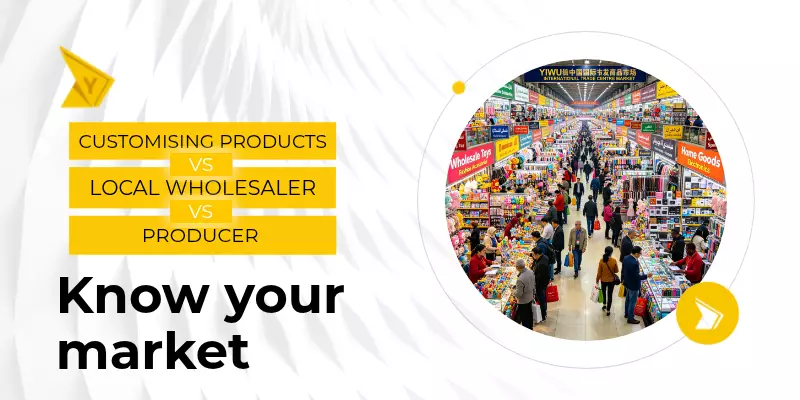
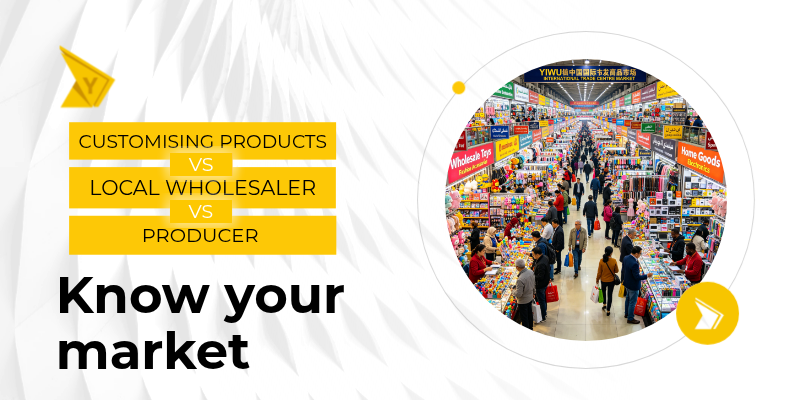
If you are sourcing from China, especially Yiwu, one of the biggest mistakes buyers make is shopping in the wrong market.
You might be a customiser looking for blank products to brand, a local wholesaler buying ready-to-sell inventory, or a producer sourcing raw materials. Each of these roles has a different optimal market, different supplier types, and different price points.
Go to the wrong market, and you will pay 20–50 percent more than necessary. Go to the right market, and you will get better prices, better customization options, and better service tailored to your business model.
Here is how to match your business type to the right market and get the best price.
If your business model is buying blank or generic products and adding your brand (logo, custom packaging, custom colors), you are a customiser.
Many Yiwu booth operators are resellers, not factories. They cannot do true customization. They will just find a factory and add a markup. If you need private label, verify they actually own the production line.
If your business model is buying finished products and reselling locally (retail stores, gift shops, online stores), you are a wholesaler.
If you just want to resell 100 units of a product, do not go to a factory that requires 1,000 units. That is overkill. Yiwu traders are better for small-volume, fast-turnaround buying.
If your business model is manufacturing finished goods yourself and you need raw materials, components, or semi-finished products, you are a producer.
Yiwu is not designed for raw material sourcing. You will pay trader markups and get lower-quality materials. Go to industrial hubs instead.
Business Type | Best Market | Typical MOQ | Lead Time | Price Advantage |
|---|---|---|---|---|
Customizer (Private Label) | Factories (Alibaba and Industrial Hubs) | 300 to 1,000 units | 30 to 60 days | 10 to 30 percent cheaper than traders |
Wholesaler (Reseller) | Yiwu International Trade City | 50 to 200 units | 3 to 7 days | Instant availability, low MOQ |
Producer (Raw Materials) | Industrial Factories (Ningbo, Foshan, Shenzhen) | 1,000 plus kg or meters | 15 to 45 days | 20 to 40 percent cheaper at bulk volume |
Mistake | What Happens | How to Fix |
|---|---|---|
Customizer buys from Yiwu trader | Pays 20 to 30 percent more, limited customization | Find OEM factory on Alibaba |
Wholesaler goes to factory | MOQ too high, long lead time | Buy from Yiwu market instead |
Producer buys from Yiwu | Lower quality, higher price | Go to industrial hub for materials |
Not verifying supplier type | Ends up with trader, thinks it is factory | Ask for license, factory video |
Chasing lowest price | Pays more later in fees, delays | Compare total landed cost |
Are you customising products, a local wholesaler, or a producer? There is an appropriate market and better price for you:
Go to the right market for your business type, and you will save 20 to 50 percent while getting better service. Go to the wrong market, and you will overpay for nothing.
Match your business model to the right market first. Then shop for price. That is how smart buyers maximize margins and minimize frustration.
We understand you may have questions .To help along your buying journey we compile answers to the most common queries.
Yiwu Machines specializes in sourcing high-quality machinery from China and providing end-to-end logistics solutions, including LCL (groupage) and FCL shipping, supplier coordination, and cargo handling
LCL shipping allows you to ship smaller volumes of cargo without booking a full container. Your goods are consolidated with other shipments, helping you save on shipping costs while maintaining flexibility.
Yes, we provide Full Container Load (FCL) shipping for customers with larger cargo volumes. FCL shipments offer faster transit times and added security for bulk orders.
We provide up to 20% free CBM space on every shipment. Once your accumulated free space reaches 1 CBM, you can use it on future shipments at no extra cost. FCL customers also receive 3 CBM credit for LCL on their next shipment. Terms and conditions apply.
Shipping is handled by Yiwu Shipping, our in-house logistics division under Yiwu Leso Group, ensuring better coordination, accurate scheduling, and reliable delivery.
We work with vetted and trusted Chinese suppliers who meet strict quality standards. We can also assist with inspections before shipment to ensure your order meets your expectations.
Yes, we provide shipment tracking and regular updates so you can monitor your cargo throughout the shipping process.
We accept multiple payment options, including bank transfers, credit/debit cards, and other secure payment methods depending on your location.
Yes, we provide guidance and support with shipping documentation and customs processes to help ensure smooth clearance at your destination.Customers are responsible for taxes imposed.
Shipping times vary depending on the destination and shipping method (LCL or FCL) 8-19days my Air Cargo and 45 days maximum by Sea Cargo, and we prioritize precise scheduling and timely delivery through our integrated logistics system.
![Yiwu Machines Logo - Red [Recovered]-01](https://yiwumachines.com/wp-content/uploads/2026/03/Yiwu-Machines-Logo-Red-Recovered-01.png "Yiwu Machines Logo - Red [Recovered]-01")